Showing posts with label Andilla. Show all posts

Thursday, 19 July 2012

Blue skies.....nothing but blue skies.......

Hey!

Today we woke up to crystal clear blue skies and not a cloud in sight.  Tankers are clearly visible as they skirt the horizon on their way into or out of Valencia harbour over 50kms away.  The mountain tops all round bake in the rising heat, the only sound the gentle hum of cicadas rising to a pitch and falling away again like so much traffic passing me by.  It's a beautiful day here in Valenciana and as I sit and punch the keys in front of the window it feels like a place apart.  It's so quiet up here away from the hustle and bustle that it can be hard sometimes to find a connection with the rest of the planet.  It's as if what happens elsewhere is unrelated in every possible way.  My world begins and ends with the vista at my fingertips.  Life is just a animated image that slips by outside my window, the cicada engines marking the passing of time as they rev and stall, rev and stall.


Figure 1.  The sun comes up as another beautiful day looms.


But I do not live in a glass cage.  Later in the day, when the glare of the early morning sun has faded, life comes back to bite you as the fire ravaged peaks can then be seen for what they are; ghostly reminders of the consequences of how we live.  It hasn't rained here for almost 17 months now.  Most predictors of global warming show the largest part of Spain turning to desert within the next 50 years as rainfall patterns get turned on their heads and global temperatures rise.  Fires, like the one we have just recently experienced here, are surely set to become a regular part of life in rural Spain.

The local Valenciano government have announced the first part of a 'rescue' package to help the people in the affected areas around Andilla.  In September 9m Euros will be made available to help those who lost their livelihoods in the disaster.  This money is also to help with the replanting of the forests, to provide some work for locals and to aid the regeneration of the scorched mountains and valleys.  It is a positive first step and the action has been taken remarkably quickly for a people entrenched in the manana culture.

When thunder clouds finally do unleash their pent up fury upon this land those areas that have already been destroyed will suffer further denudification because there is now nothing left in the soil to prevent further degradation of the land.  The ash and any richness left in the topsoil will simply be washed away. 

When it does rain here, it does so in force.  Forget cats and dogs, we're talking giraffes and elephants!  And the land is packed so hard and dry that the first heavy rainfall will just bounce off the surface taking that life-giving topsoil with it as it rushes down the mountain sides and ridgetops, leaving the land behind more sterile and inhospitable than ever, and the lowlands probably flooded (mark my words).  Gaining a foothold here afterwards would be an exercise in survivability for any organism, be it plant or animal.  Darwin's survival of the fittest put to the toughest of tests.

However, these sort of problems are not limited to Spain.  Environmental catastrophes are almost a daily occurrence.  Most just pass us by with nothing more than after thought.  An oil spill here, a flood there, a forest fire elsewhere - the list is endless and growing longer each day.  It's not until you're faced with such a catastrophe that you really sit and take notice. 

But conservationists and climatologists have been telling us for decades that the earth will pay the price for our many environmental extravagances.  But it is money that makes the world goes round and conservation.  It is economics that dictates which extravagances are worthwhile and which are not.  And conservation has to pay its' way just like anything else.  For most the chance to make a buck or two outweighs any environmental considerations.  What's more that statement rings true at every economic level; the individual, the company, the government.  The dangers and the perils of stripping our planet bare are well known and yet it goes on all the same because of the need to satisfy our economic desires and materialistic ambitions.  I'm not immune to this and I've no doubt, nor are you.

I applaud the readiness of the Valenciano government but I can't help asking if it's not a little too late.  Are we not just pissing in the wind?  Once again throwing money at a problem in the hope it will go away?

The problems are many and the solutions few.  The vanity of man leads us to believe that we know more or know better than nature itself, forgetting of course, that we are just another ongoing evolutionary accident of nature rather than its' pinnacle.  Thus we continue to interfere, to poke and to probe, to give nature a little nudge in the right direction........

9m Euros is a start but I wonder if anything will change with this money or will things just be put back how they were before?  My neighbour tells me that when he was a kid growing up here the mountains were completely forested, big pines dominant as they should be all along the Mediterranean coastlines.  Now the forests have been largely felled to fill our living rooms with fashionable furniture, to warm our feet on cold winter nights and to make way for plantations of quicker growing pines that can be harvested more often and can increase profits.  Our ambition, it seems, knows no end.  Our myopia, simply incurable.

Deforestation causes environmental problems wherever it occurs, however it occurs.  I myself have seen the consequences on many occasions, in many places.  In Madagascar - no doubt one of the most beautiful places on earth at one point - the effects have been particularly badly felt (Figs 2 & 3).  One of the poorest countries in the world (see CIA World Factbook), Madagascars problems are almost inevitably compounded by a less stable political arena and blood-sucking logging companies who would strip what remains of the forests given half a chance.  With little natural resources left the immediate future is not looking good for Madagascar.  A coup in 2009 caused tourism to drop by 50% and if what little remains of the forests is lost then that figure would drop to zero.  But how do you tell a guy not to chop that tree down because it's bad for the environment when his family are starving and they have no gas to cook with? 

I put it to you that it would be extremely difficult.........


Figure 2.  I travelled from the capital Antananarivo north to Mahajanga and then again to Diego and finally Nosy Be.  More or less the whole island was at one point forested.  Now, following soil erosion caused by the hacking down of the precious trees, hour after hour passes in a car in abject monotony.  Nothing can grow in these areas.  The soil has been completely stripped of any nutrients, to the extent that a tree becomes a highlight on what, not so long ago, would have been a journey through paradise.  


Figure 3.  As far as one can see...nothing but bald, sterile mountain ranges.


Figure 4.  In the middle of the Indian Ocean and with a largely tropical climate Madagascar was once a lush, green paradise.


 Figure 5.  Around Nosy Be it was almost too beautiful for words.

But these problems are by no means limited to the poorer nations.  In Japan and China problems arising from the removal of natural forest, particularly the slow-growing hardwoods typical of rain-forests around the globe, and the subsequent re-planting oif these areas with trees that are more 'profitable' has led to huge problems with landslides.

I was lucky enough to complete part of my post-graduate studies on the beautiful Japanese island of Yakushima in the Pacific.  Covered in dense, warm-temperate rainforest Yakushima must be one of the most stunning places on the planet to visit (see Figs 6-8).


Figure 6.  Dense warm-temperate rainforest blankets Yakushima.


Figure 7.  A century ago the island was covered in huge, ancient Yaku-sugi's (Cryptomeria japonica) some of which may have been several thousand years old.
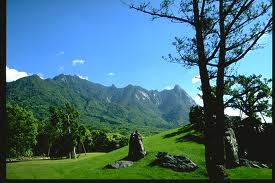

Figure 8.  Above the treeline areas of ancient cloud forest and open alpine pastures provide a stark, yet beautiful contrast to the dense forest.

My studies were centred around the regeneration of the forests following heavy logging during the first half of the 20th Century.  Many of these areas were replanted with much quicker growing pines and then these were in turn hacked down when of profitable age.  The soils of rainforests are typically very poor and often very shallow, with the vast majority of the nutrients locked away in the plants, trees and animals that live there.  Yakushima is no different.  Once the natural forests were chopped down, the soil will support new growth (of re-planted trees) for only a few years before the soil becomes completely denuded.  But unlike Madagascar, Yakushima is one of the wettest places on the planet (officially figures list between 4,000 and 10,000mm of rain per annum) and is precipitous in the extreme all over the island.  When it rains (which it does 35 days a month according to locals) the plantations were simply unable to hold the surface together.  The roots of the trees just did not hold the soils together in the same way as the plants that had evolved to live there (Yakushima has many plants and animals that are endemic to the island) - and the result?  Huge landslides all over the island.  Whole mountain sides literally slipping their moorings and taking a wander down the hill, courtesy of gravity and a whole load of water. 

I saw it myself.  One day a huge tropical storm passed close by with Yakushima still far from the eye of the storm.  The following day I tried to go to work in the forest only to find as I drove along the one road on the island that the one road wasn't there any more!  I turned a bend and where the day before there had been a mountain, there was now only a huge, ugly scar.  Upon closer inspection I could see the road and the mountain had just slipped about 75m down the side and into the sea.  There was the section of road below me...still intact!

The Japanese however, were quick to learn from their mistakes though.  Logging was banned, the whole island protected and subsequently became Japan's first World Heritage Site.  The plantations are now being left to die out on their own, leaving the rainforest to re-invade as the opportunity arises.

And by circuitous routes back to Spain....... where I do applaud the swift action of the local government, but only provided they take on board the lessons of the recent past.  Re-plant?  Sure!  But use plants and trees that would form part of the climax vegetation* of the area.  Re-plant it how it should be, not how you would like it to be!  And for Heaven's sake please, please leave decent fire breaks, not tiny avenues wide enough for a lone cyclist that are covered in debris, dead branches and years of dried up pine needles!  Spain has land a-plenty but dwindling areas of primary forest.  Instead of plantations in the mountains why not encourage natural regeneration and restrict plantations to areas which have already been used for agriculture and are now deserted, of which there are many, everywhere you look.

Thanks for listening to my blab!

P XXX

*  Climax vegetation is that which, given enough time, the land would naturally return to.

Saturday, 14 July 2012

Andilla: The Aftermath

Hiya!
Here's a couple of short videos for you.....I should explain perhaps.....I shot these 2 days ago when I rode up close to Andilla and the area where the fires were at their worst and where, apparently, they started.  The videos were shot from my bike as I cycled back down the mountain hence they are a bit shaky and the wind noise is a bit loud so I suggest you mute the sound! I did try to do a voiceover but the mic on my little camera is plainly not up to the job and you can't really hear me apart from the odd word or two!!  @What a blessing,' I hear you say!!!


Video 1. (above)  I cycled up to the last roundabout before Andilla where the fire had ravaged almost everything.  There were odd fields and low lying areas with little vegetation that had survived probably because there was nothing to burn, but as I pedal back down the mountain you'll see that it all resembles a war zone.  There were no craters or dead bodies but it was as if the fires of hell had swept over the landscape.  It was all very upsetting and will never be the same.


Video 2.  It's quite tricky to cycle and film at the same time so my camera work is a bit shaky but even allowing for my less-than Oscar winning performance the images speak for themselves.


Video 3.  To see the forests destroyed like this is a tragedy.  Nuff said!

Back soon with more

P XXX


Friday, 13 July 2012

Update: Forest fires

Hi again,
Just a quick update on what's happening near home.  Yesterday I cycled up near Andilla (where you may reacll the fires started) to see the state of the mountains.  Having already seen the mountains around Alcublas (see blog dated 9th July) I had a pretty good idea what I was expecting.  That said, when you get there the shock is just as real.  The devastation just as unremitting.  Words fail me and even photos just don't show the scale of the disaster in anything like it appears to the naked eye.

Time is short now and tomorrow I shall upload a couple of short video clips, but for now here's what I saw.


Figure 1.  Above:  The area surrounding me is rich in agriculture, particularly viniculture, much of wwhich goes on at slightly higher altitudes than where we live.  This is approaching the pueblo of Bodegas del Pardanchinos...a small collection of ancient stone houses which are, I believe, largely uninhabitated now.  I guess I was at between 750 and 800m above sea level and this blackened mountain top provided a sharp contrast to the vines that continue to flourish lower down..


Figure 2.  Bodegas del Pardanchinos.  The house in the background in the middle of the shot must have had flames licking at its' threshold.  But from here on in everything ws black.  Not a single piece of greenery at all.  Perhaps the strongest sensation was the smell which was almost overwhelming.


Figure 3.  Shot standing at the point where the road dips down the hill in the photo above (Figure 2).  The whole valley was charred.  Such a shame!  This was, still is I suppose, one of my favourite riding routes largely because of the beautiful forest where I regularly saw red squirrels, grouse and many birds of prey.  


Figure 4.  In some places near Alcublas the higher branches of trees had escaped the fire and so may well regenerate, but here the fire must have been beyond imagining, the flames having consumed even the tallest trees.


Figure 5.  Protected pines black from root to tip.


Figure 6.  From valley floor to ridgetop everything had been destroyed.


Figure 7.  Amazingly this bridge and the road survived!


Figure 8.  Looking in the direction of Andilla to where I shall venture over the next few days.

Back soon with more....

P XX

Thursday, 5 July 2012

Fires still going close to home.

Hiya!
So....where were we?  Friday

Hah!  I know......Michael was just about to be snuffed out!

Well, as you probably gathered he hadn't shuffled off his mortal coil.....in fact, he was sitting reading a book with his back to all the fuss and was completely oblivious as to the peril he was in.

"Fire?  What bloody fire?"

Michael had been sitting with his back to the fire only venturing to look the other direction when his beer can ran dry!  Even the overwhelming smell of smoke seemed to be little more than 'a bar-B gone wrong!'

But I eventually managed to push him into the car and showed him what the rest of Valencia had been watching all afternoon (Figures 1-6).


Figure 1.  The growing smoke cloud behind our house.
 

Figure 2.  From the cement works it looked like the whole valley was on fire and from where I stood, I imagined Michael's house, with him inside, underneath all that! 


Figure 3.  We drove round the corner into the next valley.  The fire was stretching in a neat line all the way from one side, down the escarpment, across the valley floor and up the other side.


Figure 4.  And what was more....it seemed to be moving fast.  Michael lives a short way to the left of this fire.  The wind was blowing it away from him but even so we were both very pessimistic at this time.


Figure 5.  There was one solitary house in the way.  I'm sure it is completely burned out now.  I'll go back to check soon. 


Figure 6.  The devastation was immense but at that moment the scale of the ecological disaster was far from our minds.  We were somewhat preoccupied worrying about survival!  All Michael could say was, "Fuck me!  I had no idea!"

Somehow we managed to survive that day.  The wind died down in the late afternoon, as did the firefighting efforts.  On no occasion throughout this fire did we hear or see the firefighters working after dark!  By this time questions were beginning to be asked of the local Valenciano government.  Were they doing enough to halt the progress of the fires?  Why did they not work through on the Thursday and Friday nights to quell the flames when they were still small enough to deal with?  Was it incompetence, bankruptcy, mismanagement or some weird combination of all three!  On the face of it the local government were doing the right things!  There they were on TV fighting the fight, saying the right things (or was it just paying lip-service?), and apparently doing the right things.  But why o' why o' why didn't they continue to fight the fires with all their might whilst the daylight lasted?  I cannot answer that and can only state what I saw quite clearly each and every day.

As the clock ticked relentlessly on and the fires marched to the tune of the southerly breezes the flying fire fighters did their best.  I am in no way criticising the bravery and dedication of these intrepid men and women.  Tragically two helicopter pilots died over the weekend fighting fires a 100km to the south in Cortes de Pallas.  My respects and condolences go to their families and friends.

Nevertheless, many people have lost everything and they, more so than me, are entitled to ask why the fire fighting stopped for siesta and why, with over 4 hours of daylight remaining, did the planes and helicopters stop flying every day when the fire was at it's height?  And why were the fires left to rage and rampage across the vineyards, the cultivated fields, the national parks and mountaintops all night, every night?

I heard a rumour that the helicopters didn't have lights!

"Oh, well, that's alright then!!  No lights so they cannot see!  But hang on, so why stop at 5.30pm then, when it's still light?"

These rhetorical conversations with myself must stop.....but then who else was I going to ask these questions of?  And more than that, who else was going to provide the answer?

"Oh I see....the football was on...now I understand!  Priorities my friend!  A simple case of priorities!  That mountain was going to burn anyway, so what difference does it make if I fight it or go to the bar?"

"Well, when you put it like that....I guess I understand?  Was it a good match?"

"Oh, I dunno!  I was too pissed to see it anyway.  But we won, so you know what that means?  That's right, no work on Monday!!!"

I am joking here, but there really is no excuse for much of the destruction.  When the fires were (relatively) small and may have been contained they were left to grow and blacken the skies of the city.  By Sunday ash was falling over Valencia in steady stream, almost as if a volcano had erupted.  And the fires were all but out of control.

Sunday morning I went out for a drive again, taking the same route I had traveled with Michael the day before.  Luckily for us, the relative chill and humidity of the previous night had put paid to the worst of the fires near us and for the first time I began to feel that we were out of danger.  The focus of the fires had shifted across to the mountains and ridge-tops opposite us where the fires raced down the Calderona mountains towards the coast.  Somewhere up behind us, probably around Andilla, the fires burned on, though the stifling smoke of the previous 2 days had now subsided, for us anyway.  Even so, small pockets of resistance still remained.  As I came to the northern side of the ridge-top behind Michael I found one such pocket.


Figure 7.  As we came round a bend in the track we could smell smoke and there was a lone fire engine watching the fire on the hillside.


Figure 8.  The whole valley was full of smoke on what was a clear, sunny day elsewhere.


Figure 9 (below).  As we went to move on our friend Julio, the shepherd, arrived.  He was asking the firemen what was happening with the fighting but didn't really get any suitable answers.  He was, understandably, very worried because his corral where his sheep are left at night, was just up the valley no more than 4-500m away.


Figure 10 (above).  Julio and I (foreground) part company for the moment after discussing the problem.  Julio, ever the optimist, made me smile with his 'never-say-burn' attitude!  Optimism is a good thing....but can sometimes misplaced.  That afternoon the fire swept up the valley (Figures 18-20) to the left burning everything in it's path and beat a door right to the threshold of Julio's corral.


Figure 11 (below).  The ridge-top that had been aflame the day before (see Figure 4 above) was now nothing but blackened stumps and piles of ash.


Figure 12.  All afternoon on Sunday lines of sea planes fought the flames at Andilla.


Figure 13.  As the danger died down for us I watched as the flames moved down the Calderona mountains towards the coast. 


Figure 14.  As the sunlight faded the extent of the fires on the Calderonas became clear.  The TV news was saying the fires had crept over the peaks and out of our view and were now ravaging the lush, green valleys of Palencia and the beautiful towns therein.


Figure 15.  ......and the fires rage on.

The following morning (Monday) I walked back round to roughly where we'd seen the fire engine the day before.  Once again we bumped into Julio who told us that he'd been coming to work on his moped when he'd seen some people trying to stamp out a small fire.  He'd stopped to help and had been fire fighting with his bare hands and walking stick - his blackened arms bearing witness to his endeavours - as he told us that things were far from secure and that both Michael and his corral were still in danger.  As we wandered down to where he'd told us the fire was we saw the smoke (Figure 16).


Figure 16.  Smoke rising from amongst what remained of the forested slopes.


Figure 17.  How the forest was before the fires struck.


Figure 18.  As we walked down the valley, the forest that, just the day before had been lush and green, had been reduced to a smouldering, smoking mound of blackened stumps and ash.


Figure 19.  All the way up the side of the ridge the ground was white, as if it had been snowing.


Figure 20.  In some places there was very little left standing at all.  It all had a very sort of 'end of days' type of feeling!  Very odd!


Figures 21-28.  It was just a small pocket of fire but was on the only remaining forested part of this side of the valley.  Everywhere else was already burned out.  It could only go up this slope or back behind us onto the ridge on which Michael lives and beyond that, where we are.


Figure 21.  Above.


Figure 22.


Figure 23.


Figure 24.


Figure 25.


Figure 26.


Figure 27.


Figure 28.


We continued down the path and very soon saw the reason for all the smoke.  It was only a small fire (I'm sure, by comparison) but even so it still looked like it had potential to spread and possibly endanger Julio's property once again.  We stayed for 10 minutes during which time both Michael and I wondered aloud how there was no-one here to even watch if the fire might spread once again (Figures 21-28).  But as we walked away we heard one of the sea planes coming in for a closer look.  It circled round and as Julio came down to join us again it dropped it's payload on the fire (Figure 29 & 30).


Figure 29.  Julio clambers up the side to snuff out any wisps of smoke with his walking stick and hands.


Figure 30.  The seaplane circled round first of all......


Figure 31.  ....and then dumped it's payload right where we'd been standing not 5 minutes before.

Tomorrow I'll be back with more updates, more pics and hopefully, some video of the fires.

Have a good day
Peter XX